
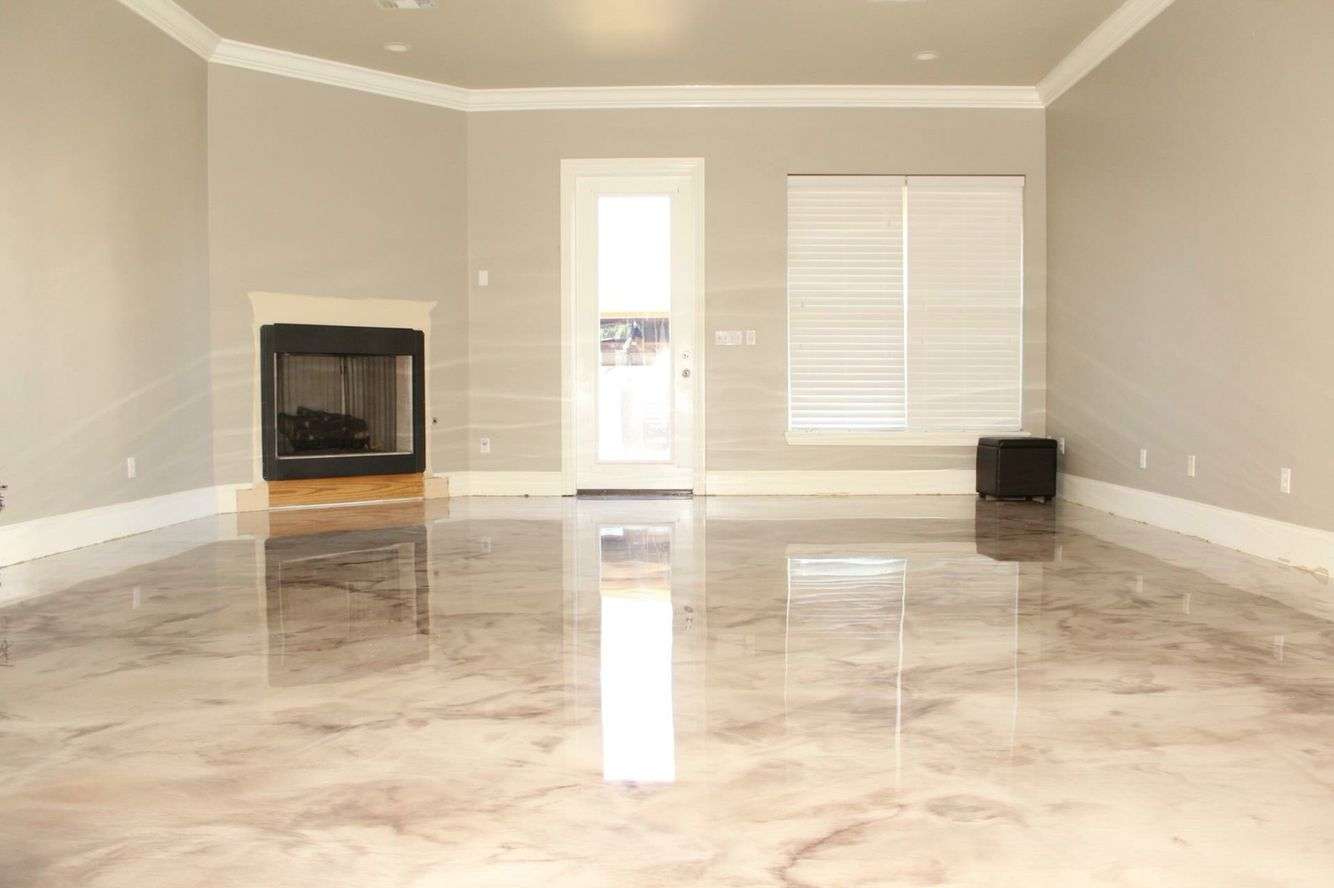
Epoxy Flooring Adelaide
We install epoxy flooring across Adelaide for garages, workshops, warehouses and commercial spaces, including solid colour coatings and epoxy flake floors. Every floor starts with the step most failed floors skipped: proper diamond grinding.
- Surface Concrete
- Finish Solid Colour or Flake
- Prep Diamond Ground
Epoxy is a two-part resin that cures into a hard, plastic-like layer bonded to the concrete.
When the resin and hardener are mixed, a chemical reaction turns the liquid into a tough surface that resists oil, fuel, water, most chemicals and daily wear. That’s not the same as the epoxy “paint” kits sold at hardware stores, which go on much thinner and are far more likely to peel.
A properly installed epoxy floor coating is easy to sweep and mop, stops concrete dust, and brightens dark garages and warehouses. It’s a practical upgrade for any floor that deals with vehicles, equipment or spills, which is why epoxy resin flooring is such a common choice for Adelaide garages and commercial spaces.
Epoxy Flooring Specification
- Two-part epoxy system over diamond ground concrete
- Solid colour or flake finishes
- Resists oil, fuel, water and most chemicals
- Suited to garages, workshops, warehouses and commercial floors across Adelaide
Why Epoxy Floors Fail, and How We Prevent It
If you’ve seen an epoxy floor peeling, bubbling or lifting under car tyres, it almost always comes down to one of four things.
Poor preparation
Epoxy needs a clean, open concrete surface to grip. Rolled onto smooth, dusty or previously sealed concrete, it only sits on top. We diamond grind every floor first, which is our core trade, so the coating bonds into the concrete.
Moisture in the slab
Moisture moving up through concrete can push a coating off from underneath. It’s one of the things we look at when assessing the slab before quoting.
Hot tyre pickup
Thin coatings can soften under hot tyres and lift when you drive off. A properly built-up system avoids this.
Sun exposure
Standard epoxy isn’t UV stable. Outdoors it yellows and chalks over time, which is why epoxy belongs indoors and undercover.
Where Epoxy Flooring Works Best
- Home garages. It stops oil stains and concrete dust and makes the space easy to clean.
- Workshops and sheds. It stands up to tools, equipment and spills.
- Warehouses and factories. It’s hard-wearing under forklifts and pallet jacks.
- Commercial and retail spaces. Showrooms, back-of-house and storage areas.
- Laundries, utility rooms and home gyms. A sealed, water-resistant surface.
Choose Your Finish
There are two main ways to finish an epoxy floor.
Solid colour
A clean, uniform finish in your chosen colour. It’s popular for warehouses, workshops and commercial spaces that want a crisp, bright floor.
Flake
Coloured flakes are built into the coating for a textured, speckled finish that hides dust and marks. It’s the more common choice for home garages.
Epoxy Flake Floors
A flake floor is an epoxy coating with decorative flakes built into it.
We apply a coloured epoxy base coat and, while it’s still wet, broadcast flakes across the surface. Once it cures, loose flakes are scraped and vacuumed off, and a clear topcoat locks everything in and sets the final sheen and texture. From standing height, it looks a little like granite or terrazzo.
Hides dust and marks
The speckled pattern disguises tyre marks, dust and everyday dirt between cleans.
Better grip
The flakes add a fine texture, which helps when the floor is wet.
Hides imperfections
Small blemishes in the slab are much less noticeable than under a solid colour.
Full broadcast or partial flake?
Full broadcast
Flakes are spread until the floor is completely covered and no base colour shows. This gives the most texture, the best dirt-hiding and the most durable build.
Partial broadcast
Flakes are scattered over a solid base colour for a lighter, speckled look and a smoother surface.
Texture. The thickness of the topcoat controls how textured the floor feels. More topcoat makes it smoother and easier to mop, while less leaves more grip. We’ll set it to suit the space.
Choosing a colour. Mid-tone greys, beiges and mixed flecks hide dust and tyre marks best. Very dark floors show dust and light scuffs, and very light floors show tyre marks. If the garage opens into the house, pick tones that work with your interior.
Epoxy Flooring vs Polished Concrete
Both give you a hard-wearing, easy-clean concrete floor. The right choice depends on what the floor has to cope with.
| Floor | What it is | Oil and chemicals | Look | Outdoors | Long-term care |
|---|---|---|---|---|---|
| Epoxy | A resin layer bonded to the concrete | Excellent resistance | Any solid colour or flake blend | Indoor and undercover only | Topcoat may need renewing after years of heavy wear |
| Polished concrete | The concrete itself, ground and polished | Good, but clean spills promptly | Natural concrete colour and stone | Honed or sealed finishes suit outdoors | No coating to wear through |
If you’d prefer the natural look of concrete with nothing on top to wear through, compare mechanical polish. For garages and driveways on a tighter budget, grind and seal is also worth a look.
How We Install Epoxy Flooring
-
01
Assess
We check the slab’s condition, any existing coatings and signs of moisture.
-
02
Diamond grind
We open the concrete surface so the epoxy can bond. Old paint, coatings or floor glue are removed at this stage.
-
03
Repair
Cracks, joints and holes are filled.
-
04
Prime
A primer penetrates the concrete to anchor the system.
-
05
Base coat
Epoxy is applied in your chosen colour. For flake floors, flakes are broadcast into the wet coat, then scraped and vacuumed once cured.
-
06
Topcoat and cure
A protective topcoat finishes the floor. It takes foot traffic sooner than vehicles, and we’ll tell you exactly when it’s safe to use each.
How much does epoxy flooring cost in Adelaide?
It’s the question we’re asked most, and the honest answer is that it depends on the floor. The main factors are:
- Size. Larger floors cost less per square metre
- Existing condition. Removing old paint, coatings or glue, and repairing cracks, adds time
- Finish. Solid colour, full flake and partial flake differ in material and labour
- Timing. Commercial jobs done after hours or in stages can affect the price
We quote in writing after seeing the floor.
DIY Epoxy Kit or Professional Installation?
DIY kits are cheaper upfront, and in a lightly used space they can be fine. The difference is preparation and thickness.
Most kits rely on acid etching or scrubbing rather than diamond grinding, and they go on in thin coats. That’s why DIY floors are the ones that commonly peel under tyres within a few years.
If the floor has to handle cars, equipment or commercial traffic, professional grinding and a built-up system will last far longer.
Epoxy Flooring FAQs
How long does epoxy flooring last?
It depends on traffic and the system. A well-prepared floor lasts many years, and the topcoat can be renewed rather than replacing the whole floor.
Is epoxy flooring slippery?
A gloss solid colour can be slippery when wet. Flake floors have more natural grip because of their texture.
What’s better for a garage, solid colour or flake?
Flake is the more common choice for home garages, because it hides dust and tyre marks and gives better grip. Solid colour suits workshops and commercial spaces that want a clean, uniform look.
Will hot tyres lift it?
Not when the slab is properly ground and the system is built up correctly. Hot tyre pickup is mostly a problem with thin DIY coatings.
Can you epoxy over an old coating?
The old coating is ground off first, so the new floor bonds to concrete rather than a failing layer. Removing old paint and epoxy is part of our preparation.
Can epoxy be used outside?
We recommend epoxy for indoor and undercover areas only, because standard epoxy isn’t UV stable. For outdoor areas, look at honed concrete or a clean and colour seal.
How do I clean an epoxy floor?
Sweep or use a blower, then mop with warm water and a pH-neutral cleaner. Avoid harsh acids and abrasive scrubbing pads.
Other Options Worth Considering
Mechanical Polish
Diamond ground and polished through progressive grits, sealed with a penetrating sealer for a hard, glossy floor.
View Mechanical Polish →Grind and Seal
Ground to a chosen stone exposure and sealed in matte, satin or gloss.
View Grind and Seal →Not Sure Which Fits?
Send us a few photos and details about the space and we’ll recommend the finish that suits it.
Ask Polished SA →Talk To Us About Epoxy Flooring in Adelaide
We’ll assess the space and quote the finish, sealer and timeframe in writing.
Get A Quote